What Is The Church According To The Bible?
What is the church? Have you ever asked yourself that question?
I have, and not without reason.
It played across my mind as I sat in a modern sanctuary with stained glass windows, polished pews, and a carefully designed stage.
I've heard people say with confidence, “This is the church.”
The words were spoken so naturally, so unquestioned, that they seemed almost beyond examination.
However, there were people there who weren't even speaking to each other for one reason or another.
So the more I heard them say it, the more the thought returned to me, "what is the church?"
It came quietly at first, but it persisted, and it grew.
I have heard the same pronouncement, “this is the church!” in various places, under vastly different circumstances, yet stated with the same absolute certainty.
I heard it spoken in large auditoriums filled with bright lights, loud music, and singing that lasted longer than the preaching.
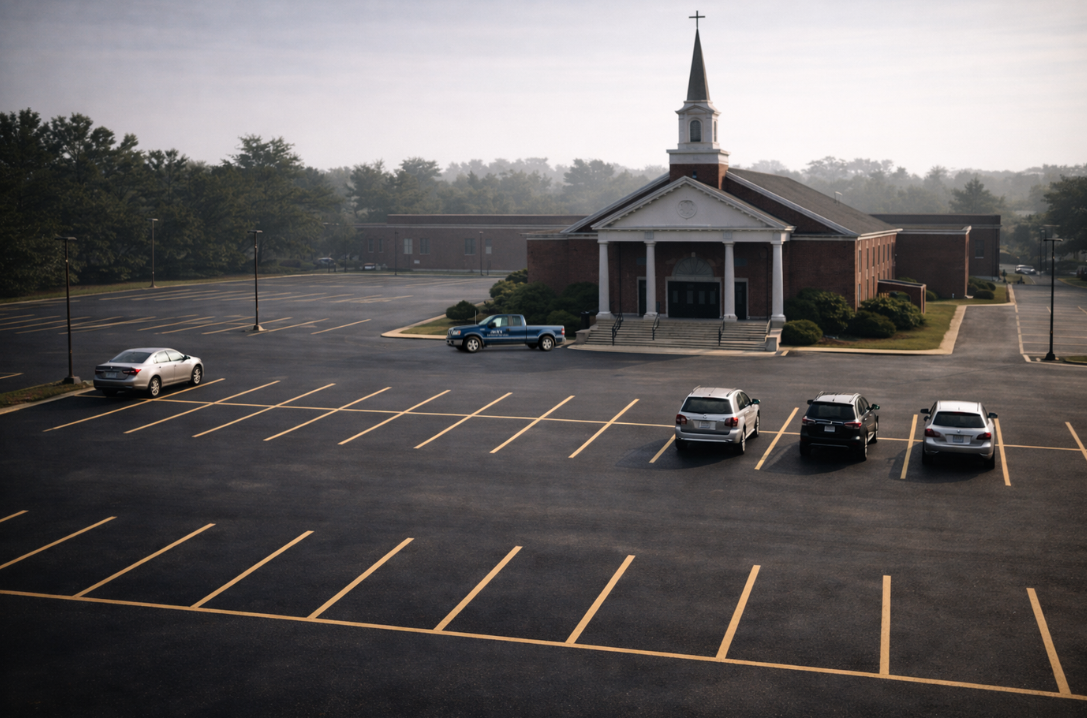
But after all the singing and shouting was over, except for the trustees cars, and the janitor's pickup, the parking lot was empty ten minutes after the service ended.
I've also heard it said in small gatherings where a couch doubled as a pew, the pulpit stood oposite the kitchen, and the folding chairs didn't always match. But the word of the Lord was going forth.
There was peace, and afterwards sweet fellowship. And more times than not, that fellowship lasted long after the preaching had ceased. Often for hours, with the breaking of bread, conversation and laughter.
Was that the church?
In each setting the statement was the same, and it was spoken as though no other meaning could make sense.
Over time, a simple question began to cement itself in my mind, and it would not leave me.
When the Bible speaks of the church, is it speaking of a people, a place, or a system?
That question my dear reader, is not merely academic. It is foundational.
Whose Builder & Maker Is God
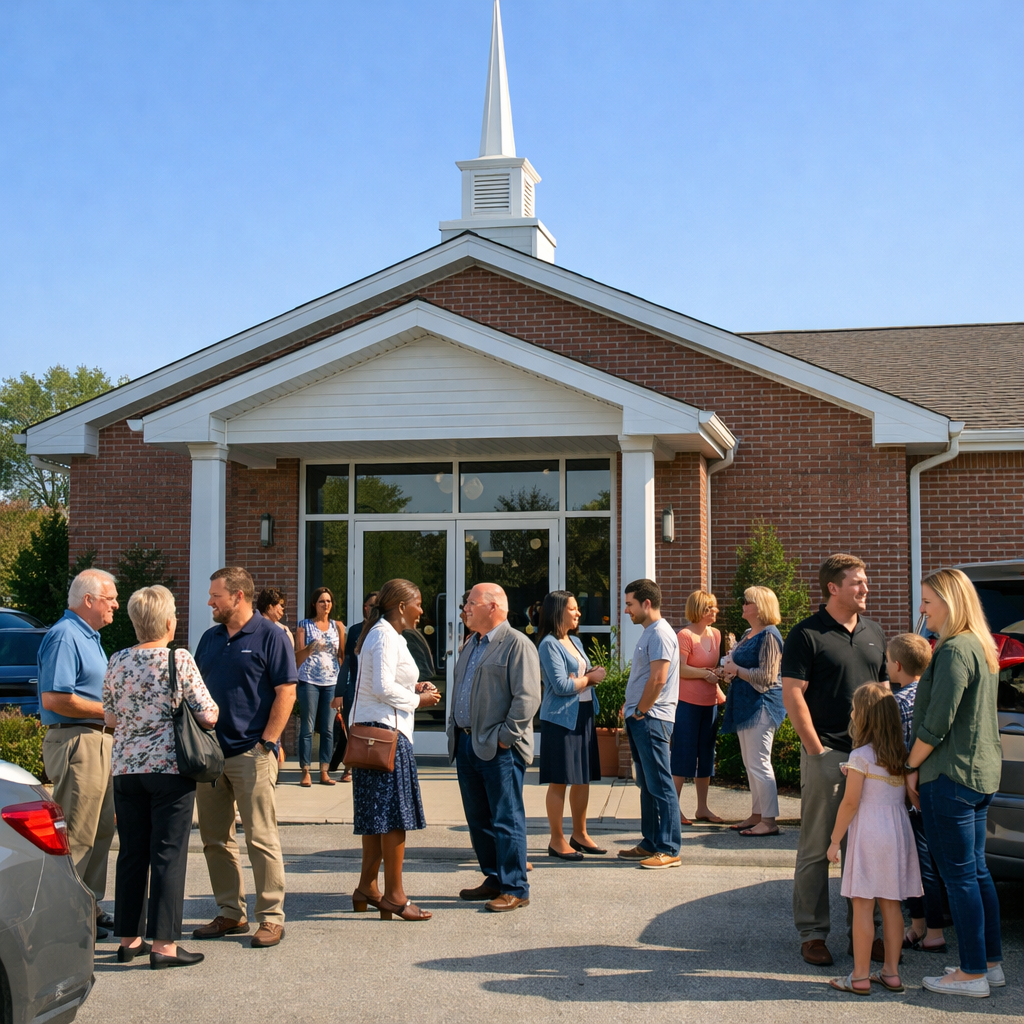
The question itself, is not meant to criticize the buildings themselves, nor the people within them.
It is a question of understanding.
If the words of Scripture are to guide our thinking, then the meaning of the word "church" cannot be decided by habit, tradition, or common speech.
It must be defined by the Word of God itself.
And the more I considered it, the more I realized that what we say without thinking, can quietly shape what we believe without realizing it.
When we point to walls and say, “This is the church,” we may be speaking casually, but the idea settles deeper than we may have intended.
The same thing can happen with a system.
When the structure of an organization becomes the point of reference, loyalty can begin to attach itself to the framework instead of to the Lord.
Without meaning to, we may start to measure faithfulness by how closely someone remains within a particular circle, rather than by how closely they walk with Jesus Christ.
Over time, the structure (or system) becomes the focal point, and the people become secondary, when the Scripture clearly presents the matter the other way around.
In the New Testament, the word translated as "church" refers to an assembly, a called-out congregation.
It points to people gathered under the authority of God, not to brick and mortar, and not to a system, or way of doing things.
It identifies those who belong to Jesus Christ, not the structure in which they meet.
When Scripture describes the church, it calls it the body of Christ. It presents Christ as the head, and believers as members joined together in living unity.
That language does not fit a building or system. It fits redeemed souls.
Hebrews 11:10
For he looked for a city which hath foundations, whose builder and maker is God.
That thought stayed with me, returning again and again, until I could no longer ignore it.
If the church is what the Bible says it is, then it must be something greater than stained glass, stronger than polished wood, and more lasting than any stage craftfully built by human hands.
Yet in common speech within Christianity, we use the same word for the people, the meeting place, and the system.
We say, “I’m going to church,” meaning a destination, or “The church down the street,” meaning a building with a sign. And sometimes we say the "church" doesn't do this or believe that.
Over time, that habit quietly reshapes our thinking.
Without realizing it, we sometimes begin to treat the institution as the church, and the people as just attendees.
We begin to measure faithfulness by our presence within a structure, rather than by obedience to Jesus Christ.
That confusion is not harmless.
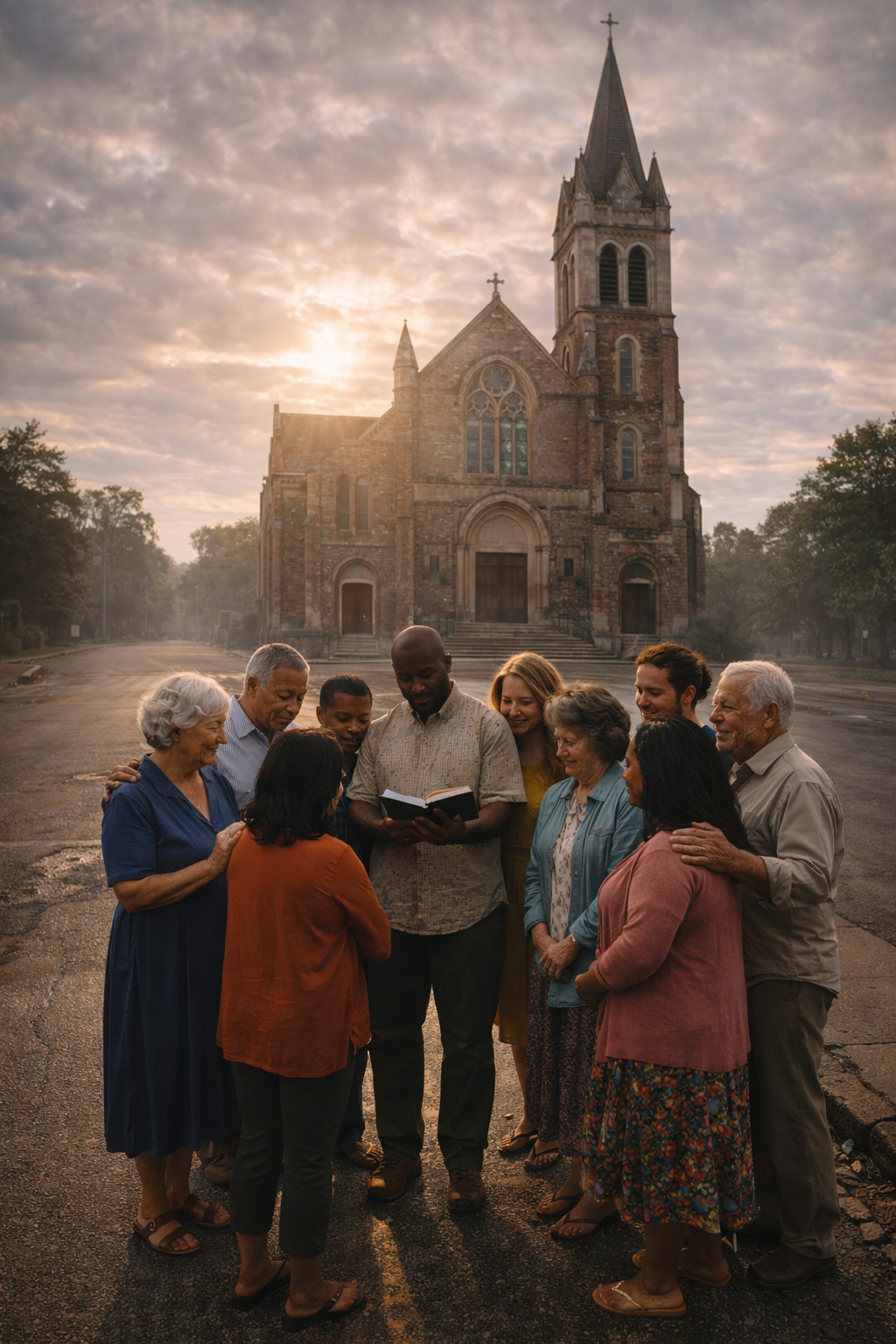
If the church is primarily a building, then Christianity becomes about maintaining property, growing attendance, and protecting reputation.
If the church is the body of Christ, then Christianity becomes about holiness, unity, truth, and love among those who have been saved.
One vision centers on inanimate bricks, the other on living stones.
1 Peter 2:5
Ye also, as lively stones, are built up a spiritual house, an holy priesthood, to offer up spiritual sacrifices, acceptable to God by Jesus Christ.
When I began to see that distinction clearly, it shifted how I read Scripture.
The church is described as something purchased, something cleansed, something set apart. It is portrayed as a spiritual house being built together.
That language is deeply personal. It speaks of hearts changed, lives reordered, and a people formed by grace.
It does not describe a denomination, nor does it describe an organization founded by men.
This is where confusion, and the enemy often enters.
Loyalty to Jesus Christ Above Loyalty to Man-Made Systems & Why it Matters
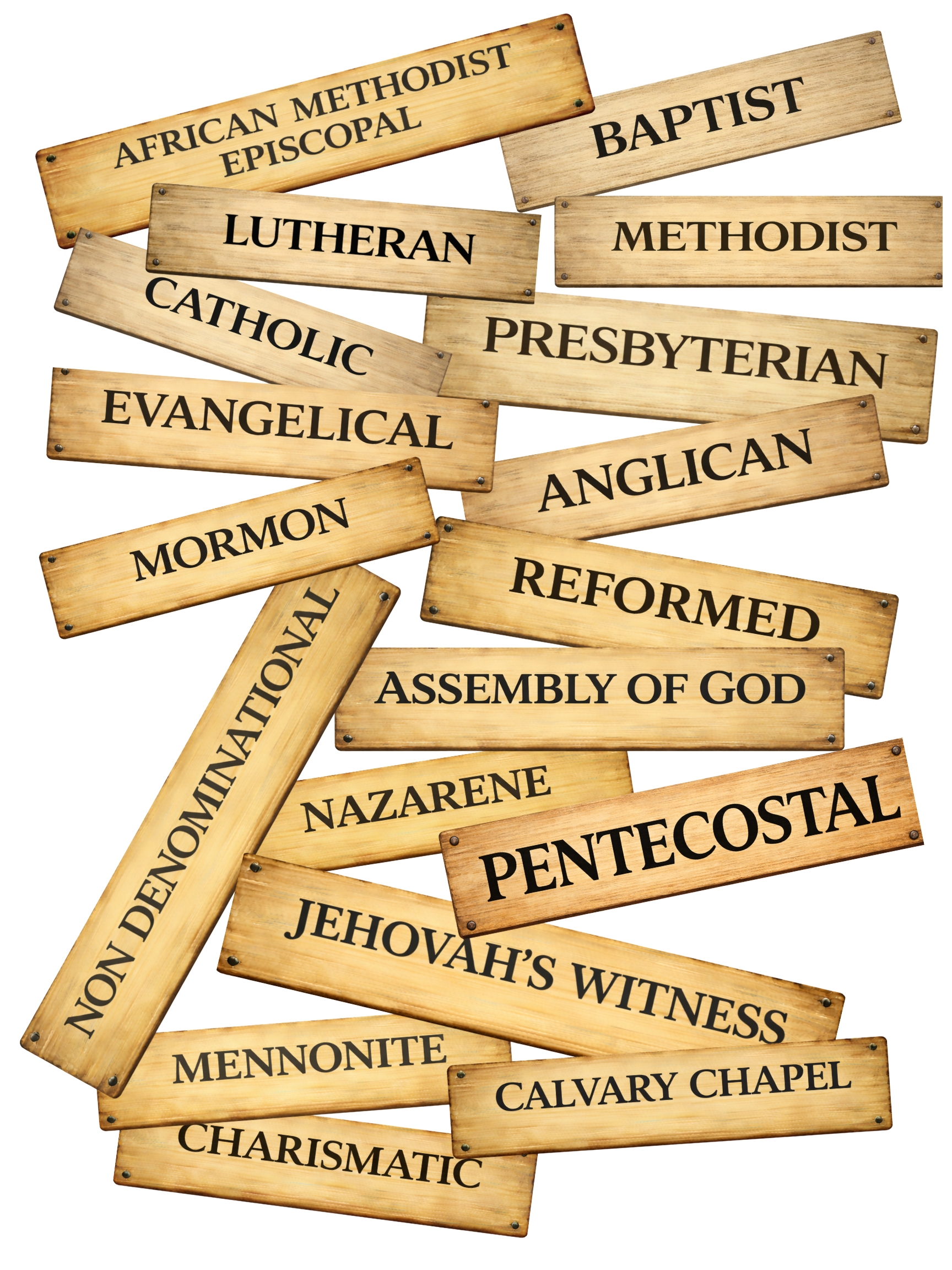
Throughout history, many religious bodies have come into existence.
Some were formed around sincere attempts to preserve biblical truth.
Others arose from disagreement, personality, or politics.
But no human founder can create the church in the biblical sense.
An institution may be organized, a ministry may be launched and a movement may be branded.
But the church as Scripture defines it is the gathering of those who have been redeemed by Jesus Christ and united by His Spirit.
That is a serious claim, and I hold it with great humility.
I do not say this to attack other ministries. We are not here for debate. We are here for clarity.
Many have been hurt by church leadership and by religious systems that confused brand loyalty with loyalty to Christ.
Some were taught that leaving a particular building meant leaving God. Others were told that questioning a leader was the same as rebelling against the church.
When we blur the line between Christ’s body and man-made structures, we place weight on the wrong foundation.
The roots of Christianity are not found in a cathedral, a synagogue, a mosque, or in any temple, chapel, or place of worship built by human hands, nor in any religious system formed by human design.
They are found in a crucified and risen Savior who gathers people to Himself. The church is His body. He is its head.
That simple truth guards us from idolatry of places and of personalities.
It also gives us hope.
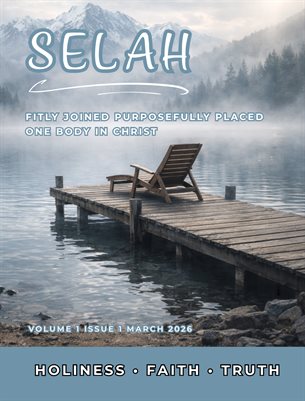
The theme of this article is shared here in part as it appears in SELAH magazine under the title What Is the Church? Flesh and Blood, or Brick and Mortar?
Some additional material has been included here for clarity,
Readers who wish to explore the subject further may also find help in the article What Is the Church & What Is Not by D. S. Warner, which appears in the same issue of SELAH.
SELAH magazine is freely available to read and download, and may be shared with others without charge.
Those who wish to support the work may do so by clicking the link below, and make a free will donation of any amount, but no payment is required.
Pause. Reflect. Return.
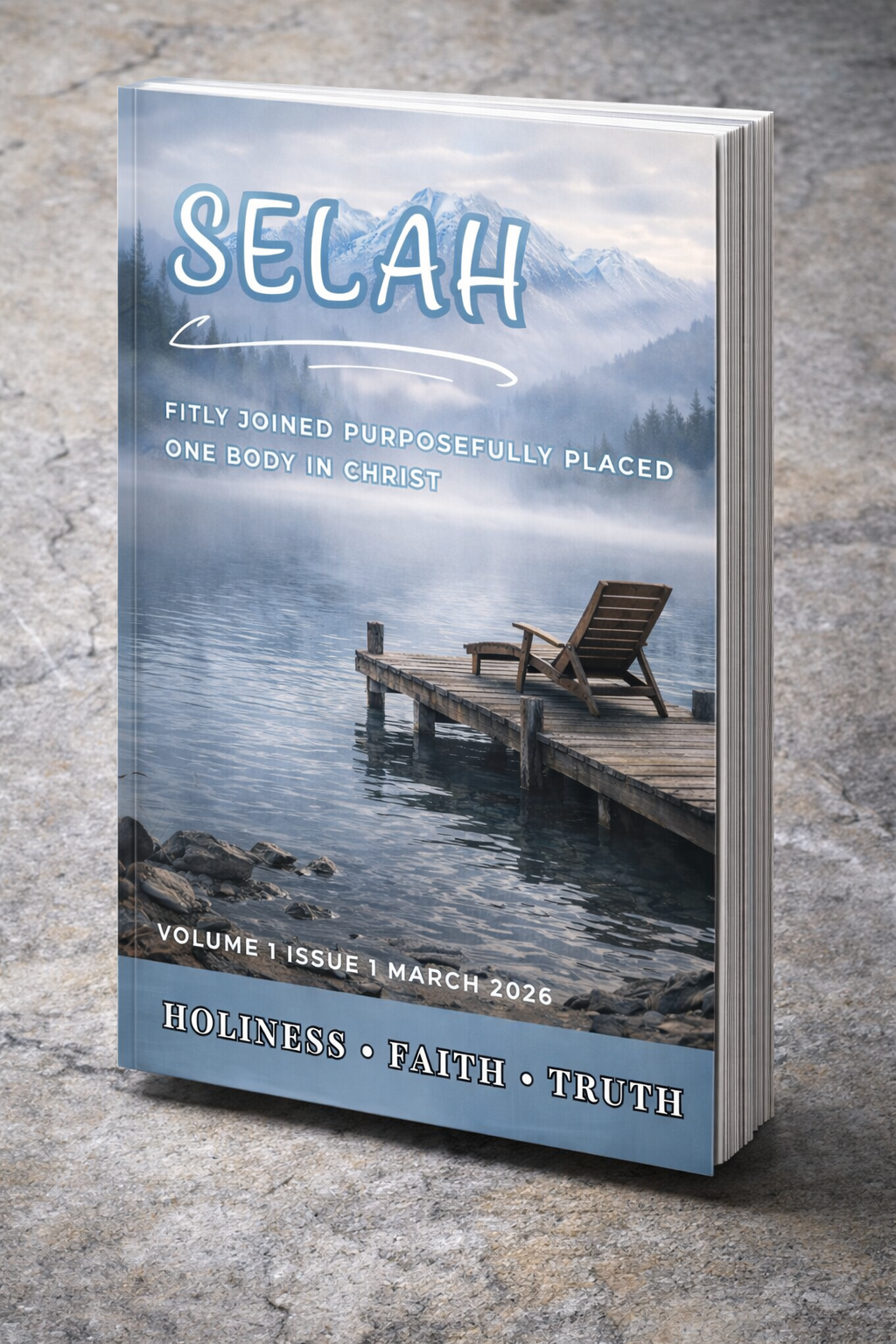
If you're seeking the Lord or dealing with hurt and abuse, SELAH offers a quiet, safe place to meet Jesus, heal, and grow in grace. A place to worship in spirit and in truth.
SELAH is here! Sign up to be on the subscription list. It's free. Come see who we are.
Psalm 34:8
O taste and see that the Lord is good: blessed is the man that trusteth in him.
YOU'RE NOT TOO FAR GONE TO BE SAVED, IT'S NOT TOO LATE TO BE CHANGED...
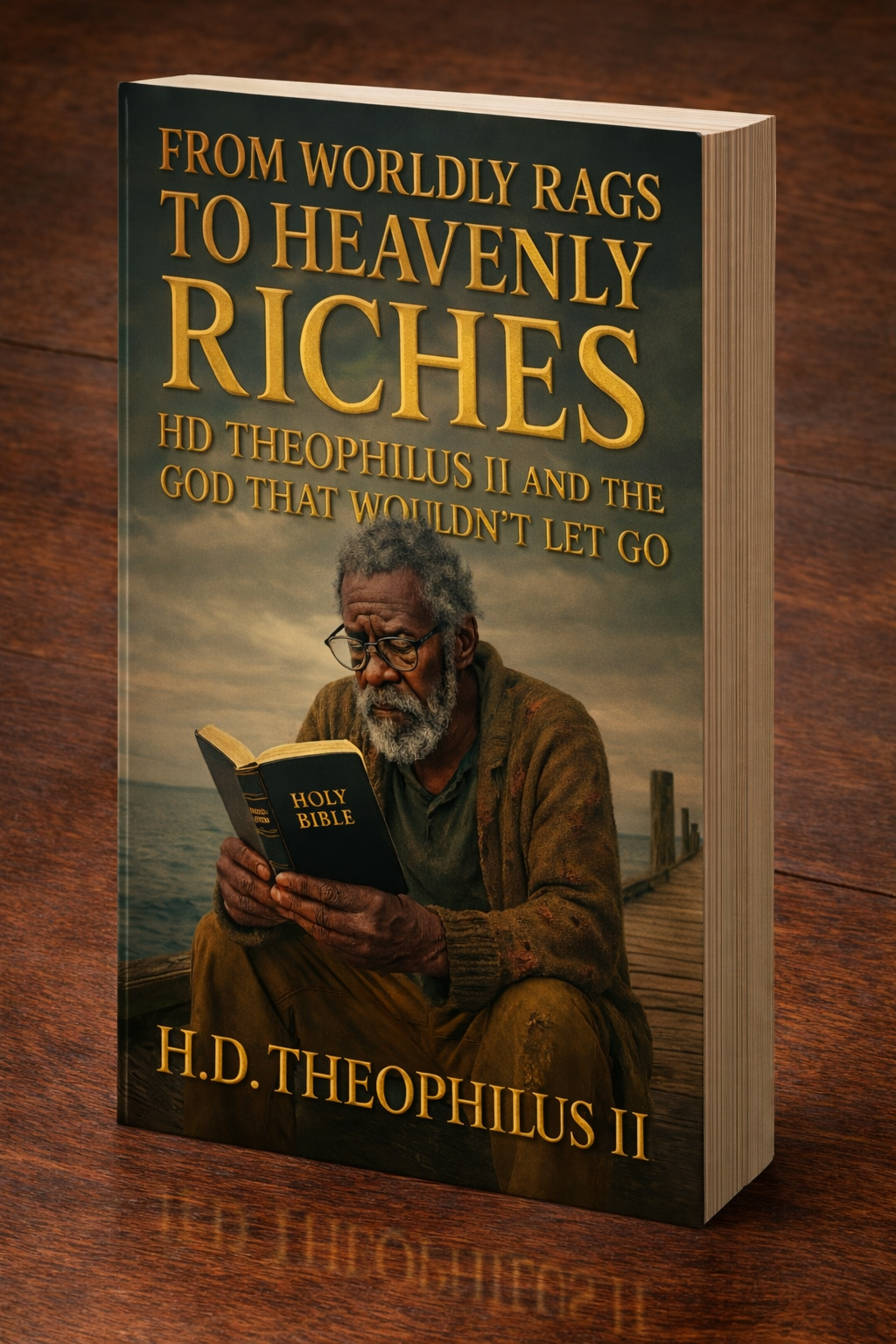
From Worldly Rags to Heavenly Riches is a raw story of broken choices, spiritual blindness, and the relentless mercy of God.
For anyone who has wandered, backslidden, or felt too far gone, it shows that Christianity is not performance but surrender, not image but inner change.
This is real redemption, step by step, as God restores purpose, brings healing, and turns spiritual poverty into lasting riches. https://a.co/d/0dPMPd4l
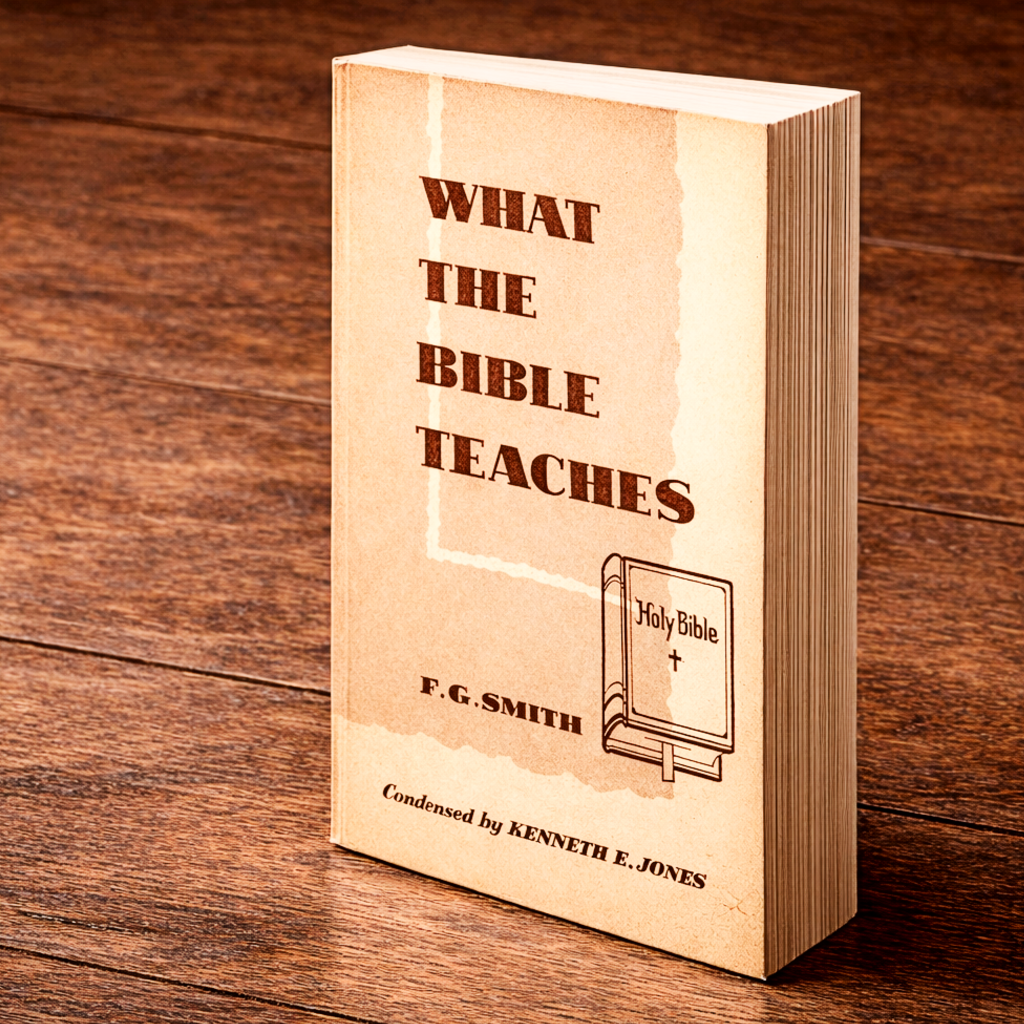
Discover What the Bible Teaches, a timeless resource exploring the foundational truths of Scripture.
This work offers clear, scripture-based insight designed to separate the pure Word of God from man-made religion.
Available as a free downloadable PDF, this book was originally published by the Gospel Trumpet Company and can now be accessed online at ChurchofGodEveningLight.com.